Traits & Temperament
The Labrador Retriever has held the title of the world's most popular dog breed for decades, and these scores illustrate exactly why. No breed combines this level of friendliness, trainability, and loyalty in such a consistent, dependable package.
Personality
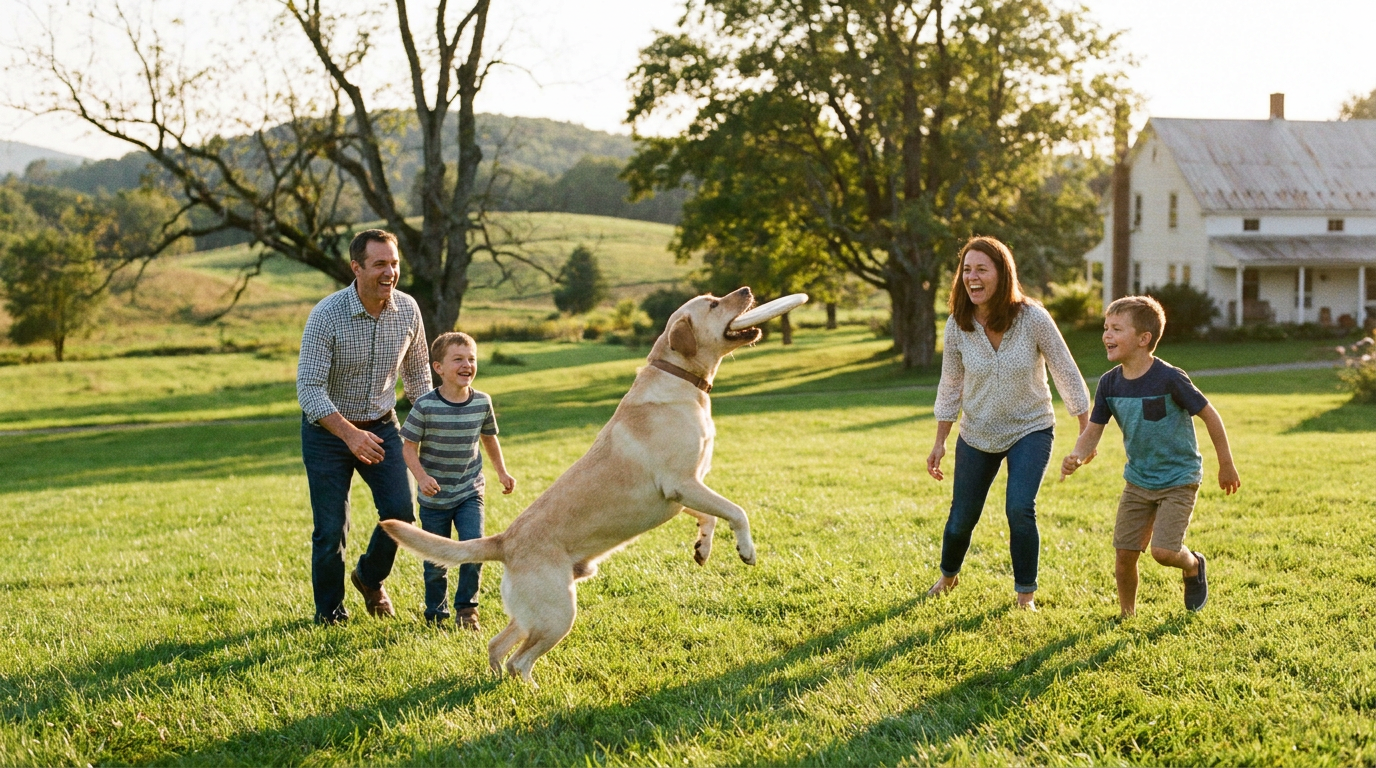
The Labrador Retriever has been the most popular dog breed in the United Kingdom and the United States for more than three decades without interruption — a record unmatched by any other breed in modern canine history. That sustained dominance is not a coincidence. It is the product of a temperament so comprehensively suited to life alongside humans that the Labrador has become, for much of the world, the defining idea of what a good dog is. They are friendly to a degree that surprises people who have not owned one before: genuinely, instinctively friendly with strangers, with children, with other animals, with other dogs, and with the postman who arrives at the door every morning. A Labrador is not merely tolerant of these interactions. They actively seek them out, approaching the world with an open warmth that is consistently one of the first things new owners remark upon.
What sets the Labrador apart from other sociable breeds is the durability of their character across the full span of their life. Many dogs settle and calm as they age. Labradors retain a puppy-like enthusiasm and delight in play well into their senior years, greeting each morning with an energy and optimism that owners frequently describe as one of the most life-affirming things about living with the breed. This sustained vitality, combined with their legendary food motivation, makes them one of the most responsive breeds to positive reinforcement training at every life stage. Guide dog organisations worldwide favour the Labrador above almost all other breeds precisely because of this combination: the focus, the tractability, and the willingness to engage with people and tasks regardless of distraction.
Beyond the family home, the Labrador's intelligence and temperament have made them the dominant breed in professional working roles. They serve as guide dogs and mobility assistance dogs for disabled individuals, as search and rescue dogs capable of locating survivors in disaster zones, as detection dogs at airports and borders, and as medical alert dogs trained to detect the onset of epileptic seizures and diabetic emergencies. This breadth of working application is unique in the canine world and reflects a combination of trainability, resilience, and emotional connection with people that no other breed has yet replicated at scale. In a household, those same qualities translate into a dog that is not only wonderful to live with, but one that understands and responds to the emotional rhythms of family life with an attentiveness that consistently earns the fierce, lifelong loyalty of their owners.
History and Origin
Despite their name, Labrador Retrievers did not originate in Labrador. Their true roots lie on the island of Newfoundland in eastern Canada, where they descended from the St. John's Water Dog — a working breed developed by fishermen to retrieve fishing lines, nets, and fish that had escaped the hooks in the ice-cold North Atlantic waters. The St. John's dog was valued for its dense, water-resistant double coat, its powerful swimming ability, its gentle mouth, and its instinctive cooperation with human workers. It was, in almost every essential respect, the prototype for the modern Labrador. British ships visiting Newfoundland in the early nineteenth century brought several of these dogs back to England, where aristocratic sportsmen recognised immediately their potential as gun dogs. The second Earl of Malmesbury is credited as the first person in England to formally establish the breed, acquiring St. John's dogs in the 1820s and 1830s and beginning a deliberate breeding programme at his Dorset estate. It was the Earl's son, the third Earl of Malmesbury, who first used the name Labrador in correspondence with the sixth Duke of Buccleuch in 1887 — the letter that effectively named the breed. The Kennel Club formally recognised the Labrador Retriever as a distinct breed in 1903.
Through the early twentieth century, the Labrador's reputation as a working gun dog of exceptional ability spread rapidly across Britain and then internationally. Their performance in the field — marking fallen game with precision, working through difficult cover without complaint, and retrieving with the soft mouth that distinguished them from harder-mouthed breeds — made them the first choice of serious sportsmen on both sides of the Atlantic. By mid-century, their suitability for assistance work had been recognised by organisations training guide dogs for the blind, and the Labrador began its transition from working gun dog to the world's most versatile and widely owned companion breed. Today they are consistently the most registered breed with the Kennel Club year after year, a position they have held for so long that it has come to seem permanent — not through fashion, but through the enduring, irreplaceable quality of what they are.
Care & Maintenance
Exercise
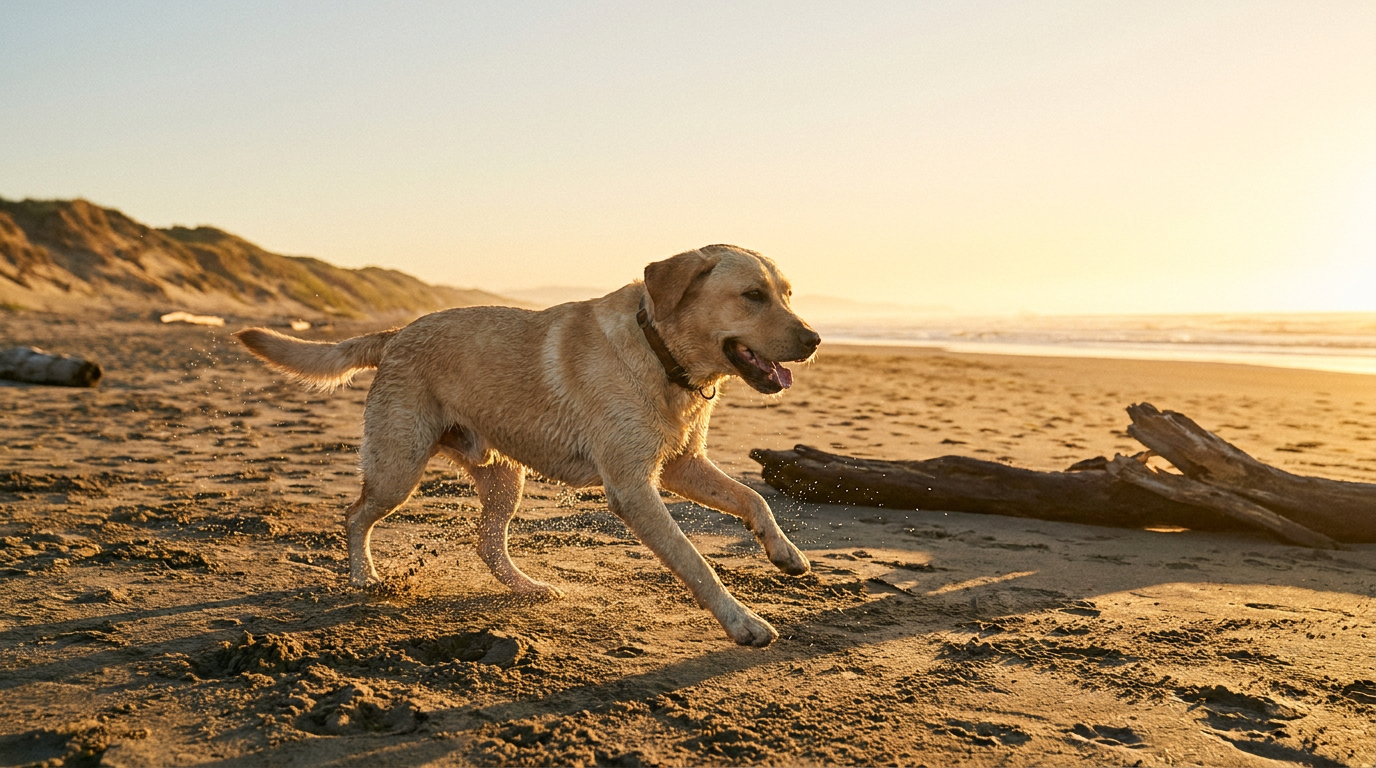
Labradors require a minimum of two hours of vigorous exercise daily. They are natural swimmers and retrievers — fetch games, swimming sessions, and off-lead runs in open spaces tap into their working instincts and satisfy them physically in a way that on-lead walks alone cannot. Without adequate daily exercise, Labradors become restless, destructive, and anxious. A garden is a significant advantage, but it is not a substitute for dedicated exercise time outside the home.
Grooming
The Labrador's short, dense double coat is one of the breed's most practically convenient features. Weekly brushing is sufficient for most of the year, increasing to daily during the two heavy shedding seasons in spring and autumn when the undercoat blows out in volume. They do not require professional grooming, but benefit from regular nail trims, ear checks, and occasional baths after muddy walks. Their water-resistant coat means they dry relatively quickly after swimming.
Nutrition
Labradors are famously food-motivated — and famously prone to obesity as a result. Research has identified a specific genetic mutation in many Labradors affecting the POMC gene, which regulates the feeling of fullness, meaning many Labradors are physiologically incapable of self-regulating their food intake. Feed a high-quality large-breed formula, measure portions carefully, and resist the appeal of their considerable begging ability. Strict portion control maintained consistently throughout their life is one of the most important things you can do for a Labrador's long-term health.
Health Screening
Labradors are predisposed to hip and elbow dysplasia, obesity, exercise-induced collapse, and progressive retinal atrophy. Always purchase from a breeder who health-tests both parents, with documented BVA hip and elbow scores and clear eye certificates. Annual veterinary examinations are essential. Weight management is the single most effective preventive measure for joint-related conditions as the breed ages.
Mental Stimulation
As a working breed bred to think, problem-solve, and operate alongside humans for extended periods, Labradors thrive when given a job. Training sessions, scent work, retrieve games, puzzle feeders, and agility activities all contribute to a mentally satisfied dog. A bored Labrador will find its own entertainment — usually at the expense of your furniture, your garden, or your composure. The investment in daily mental engagement pays back in calmness and good behaviour many times over.
Cost Snapshot
Labradors are a significant ongoing financial commitment. Below are realistic cost estimates for the UK and United States based on current market averages.
United Kingdom
| Expense | Estimated Cost |
|---|---|
| Puppy (KC registered breeder) | £1,000 – £2,500 |
| Monthly food | £70 – £120 |
| Pet insurance (monthly) | £50 – £110 |
| Annual vet care | £300 – £600 |
| Professional grooming | Not usually required |
| Estimated monthly total | £250 – £500 |
United States
| Expense | Estimated Cost |
|---|---|
| Puppy (AKC registered breeder) | $800 – $2,500 |
| Monthly food | $80 – $140 |
| Pet insurance (monthly) | $50 – $120 |
| Annual vet care | $300 – $600 |
| Professional grooming | Not usually required |
Use our interactive Dog Cost Calculator to see a tailored breakdown across your dog's full lifetime.