

5 Things Only Beagle Owners Truly Understand in 2026
Beagles are one of the UK's most beloved breeds — cheerful, curious, endlessly enthusiastic, and absolutely governed by their nose. They are also one of the most hilariously challenging dogs you can choose to share your life with. If you own a Beagle, you will recognise all of this immediately. If you are considering getting one, consider this your advance briefing.
1. The Nose That Controls the Entire Dog
A Beagle has approximately 220 million scent receptors. A human has around 5 million. This is not a trivial difference — it means your Beagle is experiencing a world of smell that is completely invisible to you. Every walk is a rich, layered landscape of information: who passed this way, what they ate, how long ago, what mood they were in. From your Beagle's perspective, you are the one with the disability for not noticing any of it.
The practical consequence of this is that the nose is not just a sense organ for a Beagle — it is their primary way of experiencing and understanding reality. When a Beagle gets an interesting scent, their brain essentially has no choice but to follow it. Willpower does not come into it. The nose is in charge.
Using the Nose for Good
Rather than fighting this instinct, the most successful Beagle owners lean into it:
- Sniffari walks: Let your Beagle lead and sniff at their own pace for dedicated portions of the walk. A 20-minute sniff walk is more mentally tiring for a Beagle than an hour of brisk marching.
- Scent games: Hide treats or a favourite toy around the garden or house and let your Beagle hunt them out. This is genuinely exhausting for them and deeply satisfying.
- Snuffle mats and puzzle feeders: Feed meals through a snuffle mat occasionally. It turns mealtime into enrichment and makes your Beagle work for their food in a way that feels natural and rewarding.
- Formal nose work: Canine nose work or scent detection sports are perfect for Beagles. The AKC's Scent Work programme is a brilliant example of how working with this instinct produces a focused, confident, brilliantly tired dog.

2. The Howl Your Neighbours Will Never Forget
Beagles do not merely bark. They bay. The Beagle's signature howl — a long, melodic, full-throated sound that was bred to carry across fields and through woodland to alert human hunters to their location — is one of the most distinctive sounds in the dog world. It is also, in a semi-detached house in a residential street, extraordinarily socially disruptive.
According to The Kennel Club's breed profile, Beagles are described as having a "loud voice" — which is about as polite a way as possible to describe the noise that will exit your dog's throat at 6am when someone parks outside.
Reducing Excessive Vocalisation
Some howling is entirely normal and healthy for a Beagle — but you can take steps to reduce the frequency and timing of unwanted vocal outbursts:
- Address separation anxiety: Many Beagles howl when left alone because they are a pack breed and genuinely distressed by solitude. Gradual desensitisation to alone time, starting with very short absences, is far more effective than any gadget.
- Exercise before alone time: A well-exercised Beagle is a quieter Beagle. A 45-minute walk before you leave for work makes a substantial difference.
- Reward quiet: Catch your Beagle being calm and quiet and reward it. They learn very quickly that calmness is valuable when it is consistently reinforced.
- Never inadvertently reward howling: Rushing back into the room when your Beagle howls teaches them that howling = you appearing. Ignore the noise (as difficult as this is) and only re-enter during a pause.
3. The Selective Hearing When a Scent is Involved
You have practised recall. You have used high-value treats. You have read the articles, watched the videos, been to the training classes. And then one day at the park, a squirrel disappears into a hedge, and your Beagle follows their nose into what might as well be another dimension. Your calls grow increasingly loud. A stranger gives you a sympathetic look. The Beagle does not come back for eleven minutes.
This is not a training failure. This is a Beagle.
Recall Strategies That Actually Help
- Never rely on recall near strong scents off-lead: This is not pessimism — it is management. In any unfenced area near roads or livestock, a long line (10–15m) gives your Beagle freedom to sniff while keeping them safe from their own instincts.
- Recall training is a lifelong practice: Practice recalls constantly, in low-distraction environments, and reward them massively every single time. The habit needs to be stronger than the scent impulse.
- Use a unique recall sound: A whistle or a specific high-pitched sound conditioned purely to mean "come back and receive the best thing in the world" can cut through scent distraction better than a shouted name.
- Never punish a return: If your Beagle comes back after an adventure, no matter how long it took, the return must always be celebrated. Any negative response teaches them that coming back leads to bad outcomes.
For a deeper dive on managing Beagle recall and outdoor behaviour, read our guide on How to Keep Your Beagle Happy, Healthy and Out of Trouble.
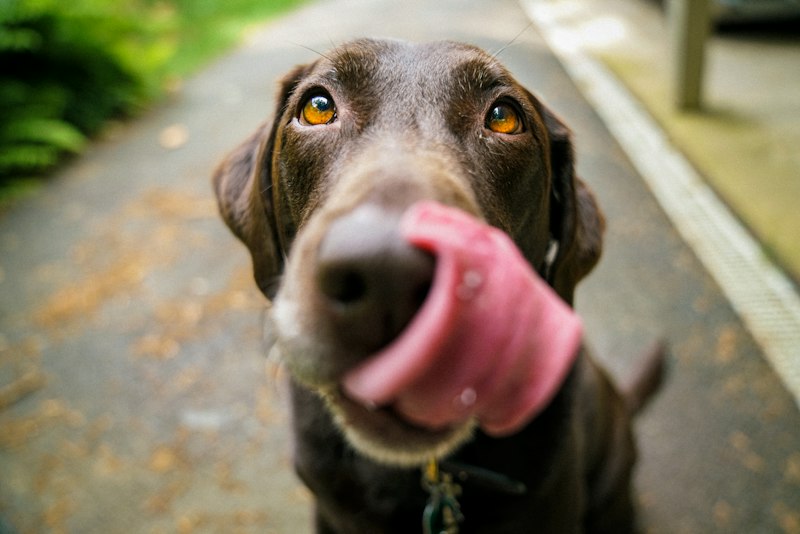
4. The Eternal Optimism About Food
Beagles were developed to work in packs on multi-day hunts, and their relationship with food reflects this history. They are enthusiastic, opportunistic, and utterly without shame when it comes to eating. A Beagle will counter-surf, bin-raid, eat another dog's food, and consume things that should not technically be food at all, all with an air of cheerful confidence that suggests they see nothing wrong with any of it.
This matters for health as much as for household management. Beagles are one of the breeds most prone to obesity, and an overweight Beagle faces serious health risks including joint problems, heart disease, and reduced life expectancy. Their appetite cannot be used as a guide to how much food they actually need — a Beagle will always be hungry, regardless of how recently or how much they have eaten.
Practical Feeding Tips for Beagles
- Measure every meal: Do not free-feed or estimate. Use the guidelines on your food packaging as a starting point and adjust for your individual dog's weight and activity level.
- Secure all food: Child-lock your bins, keep worktops clear, and never leave food unattended. A Beagle is faster than you think and has no moral objection to counter-surfing.
- Use food for training and enrichment: Your Beagle's enthusiasm for food is a powerful training tool. Use a portion of their daily meal allowance for training treats and puzzle feeders rather than adding extras on top.
- Check with your vet: If your Beagle is gaining weight despite measured portions, speak to your vet. Some Beagles have genuine metabolic tendencies towards weight gain that require veterinary management.
For all the right leads to keep your food-motivated Beagle safely on adventures, browse the Real Barks dog leashes collection.
5. The Chaos That Somehow Makes Every Day More Joyful
Here is the thing nobody tells you before you get a Beagle: yes, they are chaotic. Yes, they will embarrass you at the park, howl at inconvenient times, eat things they absolutely should not, and regard your recall training as an amusing suggestion rather than a directive. And also — they are one of the most joyful dogs on earth to live with.
Beagles are deeply social, affectionate, and genuinely funny. They approach life with a relentless enthusiasm that is hard not to find infectious. They are excellent with children, generally friendly with other dogs, and have a warmth and expressiveness that makes them feel like genuine companions rather than pets. That wagging tail and the look of pure delight on their face when you pick up the lead — every single day — is one of life's better moments.
The chaos is real. The joy is more real. If you want to read more about setting your Beagle up for success, check out our full guide to Essential Accessories for Beagle Owners.
Once you have lived with a Beagle, the quiet is the thing you never quite get used to.
Written by the Real Barks Team
Real Barks is a UK-based dog accessories brand dedicated to helping dog owners find the best gear for their companions. We donate 10% of every sale to Battersea Dogs & Cats Home through our partnership with Work for Good. Every article is written by dog lovers, for dog lovers.
🐾 Not sure which breed is right for you?
Take our free 2-minute quiz and find your perfect dog breed match.
Find Your Breed 🐾