

5 Things Only Golden Retriever Owners Truly Understand in 2026
Golden Retrievers have a way of making everyone who meets them feel like the most important person in the world – which is either extremely flattering or, once you realise they do it with absolutely everyone, slightly humbling. Life with a Golden is warm, muddy, fur-covered, and joyful in a way that is genuinely difficult to describe to someone who hasn’t experienced it. Here are five things only Golden Retriever owners truly understand in 2026, from the team at Real Barks.
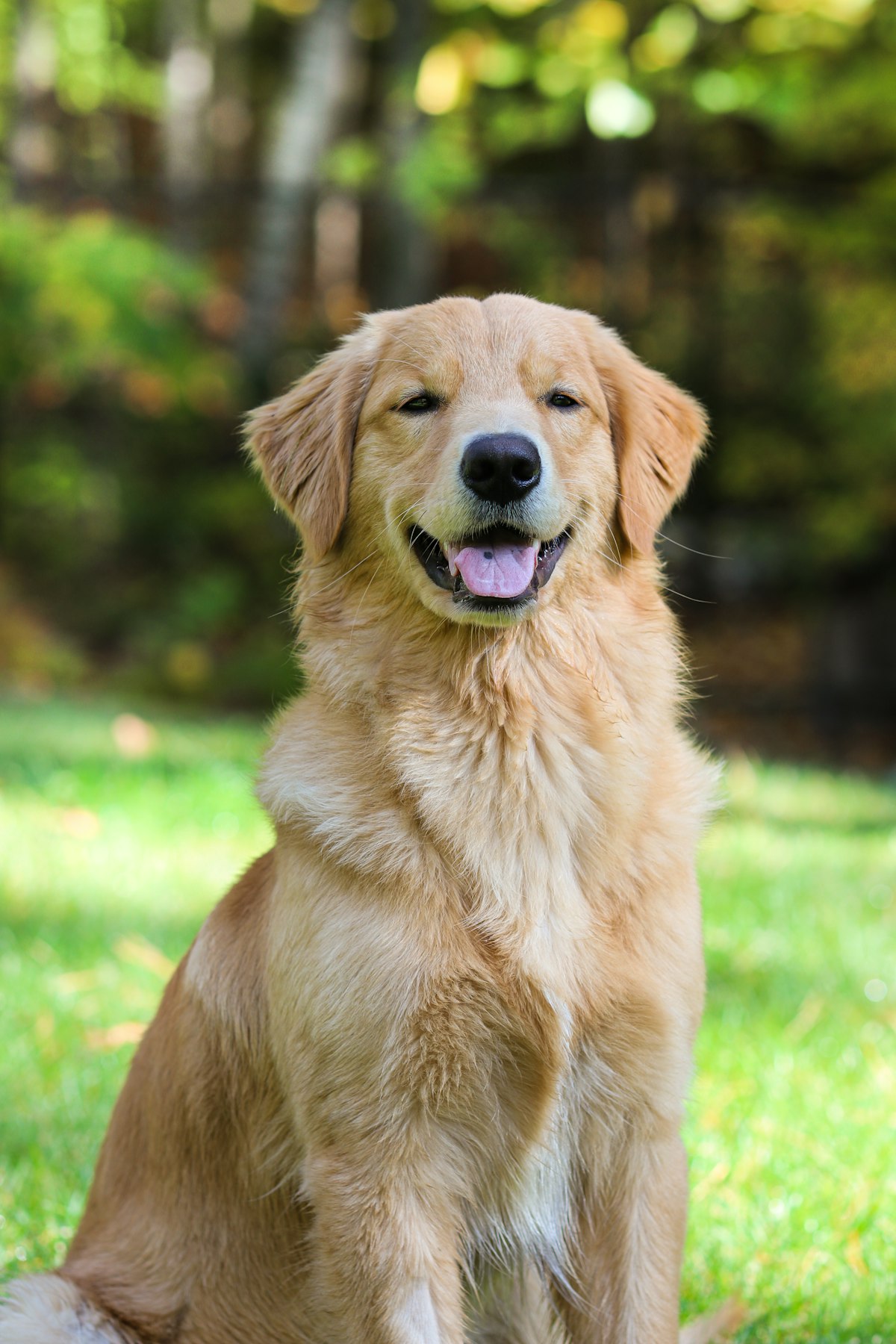
Golden Retrievers bring joy to every moment – and a considerable amount of fur. Photo: Unsplash
- Average weight: 25–34 kg
- Coat type: Dense double coat, wavy or straight – sheds heavily and requires regular brushing
- Energy level: Very high – minimum 2 hours of exercise daily
- Lifespan: 10–12 years
- Known for: Gentle temperament, love of water, exceptional retrieving instinct, and an enthusiasm for life that never really dims
1. The fur is everywhere. Always. Without exception.
No amount of reading about Golden Retriever shedding prepares you for the reality. Goldens shed throughout the year, with two significant blowout seasons in spring and autumn where the volume of fur produced is extraordinary. Golden Retriever owners stop owning dark clothing. They develop a philosophical relationship with fur in their food. They buy lint rollers in bulk.
The practical approach is a consistent grooming routine – brushing at least three times a week with a deshedding tool or slicker brush, daily during blowout seasons. Beyond fur management, regular brushing checks for skin issues, distributes coat oils, and gives you the opportunity to spot any lumps or injuries. The RSPCA recommends regular grooming for double-coated breeds as a welfare standard, not just an aesthetic one.

Regular brushing is the only thing standing between you and complete fur domination. Photo: Unsplash
2. They are incapable of being a guard dog – and that’s fine
Golden Retrievers are not guard dogs. They are not watchdogs. They are the dog who, upon a stranger entering your home, retrieves a toy excitedly to show them and then leans against them for petting. This is not a failure of the breed; it is exactly what they were selected for – a dog with genuine openness to all people, which made them ideal hunting companions who wouldn’t be reactive around strangers in the field.
Understanding this about your Golden means setting appropriate expectations. They will alert you to nothing. They will befriend your burglar enthusiastically. What they will do is provide you with a quality and constancy of companionship that is genuinely remarkable – and for most owners, that is vastly more valuable than a security system.
“Golden Retrievers were selected over generations for a temperament that is genuinely open and friendly to all people. This isn’t a lack of discernment – it is a deeply bred characteristic that makes them one of the most reliably gentle and sociable breeds in the world.”
3. Water is not a weather condition – it is an opportunity
Golden Retrievers were bred to retrieve waterfowl – swimming and water retrieval is in their DNA as profoundly as anything. They do not avoid rain; they enjoy it. They do not go around puddles; they walk through them deliberately. They locate every water source within a significant radius and view it as an invitation. Your car’s back seat will never be fully dry again.
Swimming is actually excellent exercise for Golden Retrievers – it is low-impact, highly satisfying, and engages the retrieving instinct in a way that makes it deeply fulfilling for the breed. Our Dog Toys & Interactive Toys collection includes floating fetch toys perfect for water sessions. After water activities, checking and drying the ears is important – Goldens are prone to ear infections, and moisture trapped in the ear canal after swimming is a common trigger.

Water is not an obstacle for a Golden Retriever. It is the entire point. Photo: Unsplash
4. Their exercise needs are non-negotiable
Golden Retrievers are consistently underestimated in terms of exercise requirements. Their gentle, biddable temperament can give the impression of a low-key dog – until they’ve been insufficiently exercised, at which point that impression is corrected rapidly. An under-exercised Golden is a Golden who has decided to landscape your garden, redecorate your skirting boards, or engage in other creative projects you did not commission.
Two hours of exercise per day is the genuine adult minimum – not a guideline, not an ideal. That exercise is most effective when it includes variety: different routes, different surfaces, swimming when possible, and games that engage the retrieving instinct. A Kennel Club-recommended approach combines physical exercise with mental stimulation – training sessions, puzzle toys, and scent games – for the most satisfying overall daily routine. Our Dog Harnesses & Vests collection has options suited to the active Golden Retriever’s outdoor lifestyle.
5. They carry things – always, and with great pride
Golden Retrievers have a retrieving instinct so strong that many of them simply cannot greet you at the door without bringing you something. It doesn’t matter what. A sock, a toy, a piece of post, an entirely unidentifiable object – the important thing is that they have retrieved something and are presenting it to you with enormous pride. This is not a trained behaviour in most Goldens; it simply emerges naturally from their heritage.
This retrieving drive is one of the most endearing things about the breed – and one of the most useful for training. Golden Retrievers are typically easy to motivate with fetch games and retrieval tasks, making recall training, object identification, and trick training much more accessible than with breeds who have less interest in the retrieve. Our Dog Coats collection and outdoor gear are designed with active, adventure-ready dogs like Goldens in mind – because a Golden Retriever at their best is always mid-adventure.
- Teach “fetch” and “drop it” early – invaluable recall motivators for the breed
- Provide a basket of dog-safe toys near the front door for greeting retrieval
- Use the retrieving drive in training – it makes Golden Retrievers remarkably easy to motivate
- Rotate toys to keep them novel – Goldens lose interest in familiar objects quickly
- Never punish carrying behaviour – redirect to appropriate items instead
Frequently asked questions
Are Golden Retrievers good with children?
Golden Retrievers are widely considered one of the best family breeds – patient, gentle, playful, and robust enough to handle the energy of children. Their retrieving heritage means they love games and interactive play, which suits children perfectly. As with any dog, supervision around very young children is sensible, and teaching children appropriate dog interaction is as important as training the dog itself.
Do Golden Retrievers suffer from separation anxiety?
Golden Retrievers are deeply social and bond strongly with their family, which means they can be prone to separation anxiety if not taught from puppyhood that being alone is safe and temporary. A gradual alone-time building programme from early puppyhood – combined with enrichment toys left during absences – prevents the majority of separation-related issues. Most Goldens who struggle with alone time have simply never been taught that it ends and that you always return.
How often does a Golden Retriever need bathing?
Most Golden Retrievers need bathing every 4–6 weeks, or more frequently if they’ve been swimming in ponds or muddy water. Over-bathing strips the natural oils from their coat and can cause skin dryness – if your Golden smells fine and their coat looks clean, there’s no need to bathe more frequently than monthly. Between baths, a good brush-out removes most surface dirt and keeps the coat in good condition.
About the author
Enrico Crispino – Dog lover and founder of Real Barks, a UK dog accessories brand partnering with Battersea Dogs Home and Work for Good. Real Barks is on a mission to change dogs’ lives for the better.
🐾 Not sure which breed is right for you?
Take our free 2-minute quiz and find your perfect dog breed match.
Find Your Breed 🐾